Image and video decision
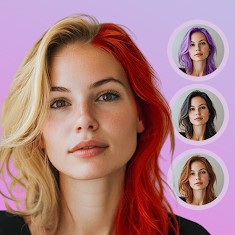
HairLab
A capable developer can build a basic AI hairstyle-tryon pipeline and mobile client, but reproducing the vendor's polished UX, scale, and any proprietary models/datasets is non-trivial; a narrow DIY replacement is realistic, full parity is not.
View on Google Play↗Built by Kishan Kanani, who ships 4 products in this index
Not priced
No pricing page we fetched carried a figure, so there is nothing to compare against. The build side is still real.
$100one-off80 h to build
$200/mo6 h/mo upkeep
No published price to break even against.
Open-source builds that already do this
Every project below is open source and already does this job today. Fork one, self-host it, or take the parts you need - the build prompt further down assumes an empty file, and this is the shortcut past that. Licences differ; check the one on each card before you ship. All HairLab alternatives, with the arithmetic →


What a replacement has to do
- User uploads selfie → detect & align face → run AI hairstyle/style/color generator → composite rendered hair onto photo → preview, save, or share result
What it still won’t have
- Polished mobile UX and cross-device polish (animations, onboarding, subscription flows)
- Any proprietary models or datasets the vendor may use for realism
- Established user base, reviews, and in‑app payment/subscription handling experience
- Ongoing A/B testing and analytics telemetry already tuned by the vendor
What remains hard
- Product polish and ongoing maintenance
First-year cost
No published price
HairLab does not publish a price we could read, so there is nothing to compare against. What building costs is below.
Money you would actually spend
Time you would spend
—
What you would spend
What we assumed
The verdict above measures whether you could build it. This one is only about money.
Runnable build prompt
Build a self-hosted AI hairstyle-tryon service: stack React Native mobile app (Expo) + Node.js/Express backend + Python FastAPI inference service. Core features in scope: (1) mobile selfie capture and upload, (2) backend endpoints to receive images and store originals on S3-compatible storage, (3) face detection and alignment using a lightweight face-landmark model, (4) run an open-source image translation model (e.g., diffusion or GAN) in Python to generate hairstyle/color variants, (5) compositing step to blend generated hair onto original photo, (6) endpoints to retrieve results and share/export images, (7) basic subscription stub (local feature-gate) and error handling. Out of scope: retraining large generative models from scratch, multi‑tenant billing, and advanced analytics. Provide automated tests for API endpoints and inference pipeline, logging and retries for model inference, and a README with deployment steps (Docker Compose for inference service + managed Postgres + S3-compatible storage).
How we checked
How the score was reached
- Partly verdict base52
- An open-source build was found+5
- 3 cited sources+3
- Evidence score60
The base comes from the verdict. Everything under it is a check that either happened or did not, and each one is a fact frozen in this record rather than a judgement made at render time - so the same evidence always produces the same number.
How scoring works →Cited sources · 3
Every page the run actually retrieved.
- official productHair Color Changer: HairApp - Google Play
- open sourcehacksider/Deep-Live-Cam
- open sourcesnapotter-hq/SnapOtter
Integrity checks
What held up, and what did not.